MALAYSIA TRAVEL · FOOD ROAD TRIP · CULINARY TRAVEL · 2026
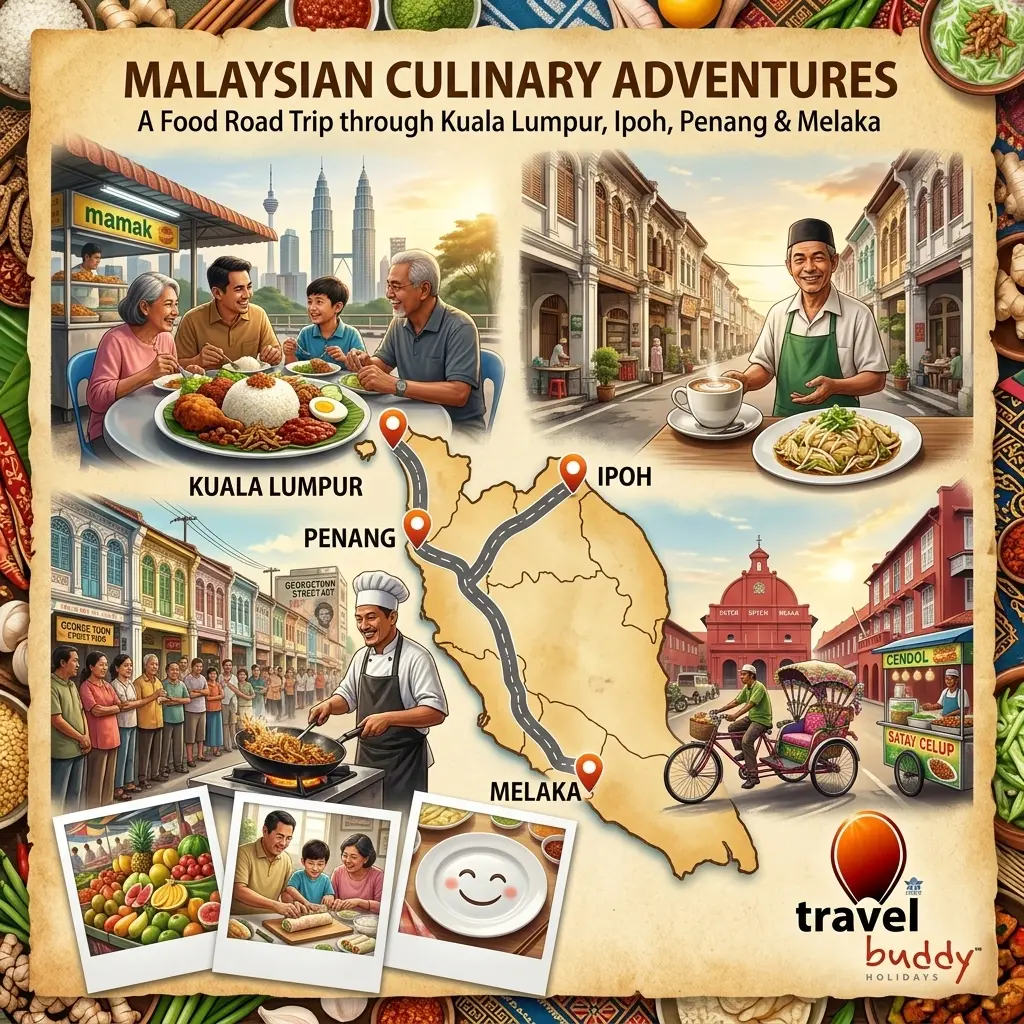
Malaysia Food Road Trip 2026: Kuala Lumpur, Ipoh, Penang & Melaka
A Malaysia food road trip is one of the most rewarding ways to understand the country. Instead of treating local food as something to fit between attractions, build the journey around what each destination tastes like — from Kuala Lumpur’s multicultural street-food scene and Ipoh’s kopitiam traditions to Penang’s hawker culture and Melaka’s Peranakan flavours.
Malaysia is particularly well suited to this style of travel because its food reflects centuries of Malay, Chinese, Indian, Peranakan and regional influences. Two cities may serve dishes with similar names yet produce completely different experiences because of local ingredients, cooking traditions and community history.
In September 2026, Tourism Malaysia placed this connection between food and travel directly in the spotlight through the latest Air Love Cuti-Cuti: Jom Makan-Makan campaign, encouraging travellers to use dishes as a reason to discover different destinations.
Why Food-Led Travel Is Especially Relevant in Malaysia in 2026
Tourism Malaysia launched the third edition of Air Love Cuti-Cuti: Jom Makan-Makan on 15 September 2026, positioning Malaysian food as a reason to travel between destinations rather than simply something visitors eat once they arrive.
Its food-discovery platform currently covers destinations including Kuala Lumpur, Penang, Perak and Melaka — four stops that can naturally form the basis of a food-focused Malaysia holiday.
The campaign reflects a wider idea that suits international visitors too: start with the dish, then discover the neighbourhood, community and destination behind it.
This Is Not Just a “Best Malaysian Food” List
Malaysia already has dozens of famous dishes. Trying to eat every one of them during a single holiday can quickly turn a food trip into a checklist.
A better approach is to give each destination its own culinary role.
Kuala Lumpur
A broad introduction to Malaysia’s multicultural food traditions and modern dining scene.
Ipoh
Old-town coffee culture, noodles, local snacks and dishes strongly connected with Perak.
Penang
One of Malaysia’s richest concentrations of street food, hawker cooking and Peranakan influence.
Melaka
Peranakan cuisine, asam pedas, heritage streets and food shaped by centuries of cultural exchange.
How to Plan the Route Without Unnecessary Backtracking
Although Kuala Lumpur, Ipoh, Penang and Melaka all belong in a Malaysia food journey, their geography matters. Melaka lies south of Kuala Lumpur, while Ipoh and Penang are to the north.
For travellers who want an efficient point-to-point route, a logical order is:
Melaka → Kuala Lumpur → Ipoh → Penang
Or reverse the route and travel from Penang south towards Melaka.
If your international journey begins in Kuala Lumpur, you can still include all four cities, but consider how your final departure point affects the route. The goal is to spend more time eating and exploring and less time retracing the same highway.
Stop 1: Kuala Lumpur — Taste Malaysia in One City
Kuala Lumpur is a useful introduction because its food scene brings together communities and cooking traditions from across Malaysia.
A first-time visitor can move from Malay dishes to Indian food, Chinese hawker cooking, kopitiam favourites, modern cafés and international restaurants without leaving the city.
Explore Jalan Alor After Dark
Jalan Alor in Bukit Bintang is one of Kuala Lumpur’s recognisable evening food streets. Its stalls and restaurants serve grilled food, noodles, seafood, fruit and dishes representing several culinary traditions.
It is lively rather than quiet, which is part of the experience. Go with the expectation of sharing the street with other diners rather than searching for a polished restaurant atmosphere.
Look Beyond One Food Street
Kuala Lumpur rewards travellers who explore different neighbourhoods. Kampung Baru offers another perspective on Malay food culture, while Petaling Street and the wider city centre introduce different Chinese and multicultural culinary traditions.
Instead of ordering full meals at every stop, share dishes where practical. A food-focused holiday becomes much easier when every tasting does not need to become a banquet.
Nasi lemak, satay, roti canai, local noodle dishes, Malaysian desserts and neighbourhood-specific specialities all make useful starting points. Dietary and halal status can vary between individual outlets, so check directly when this is important to you.
Stop 2: Ipoh — White Coffee, Old Town & Perak Flavours
Ipoh deserves more than a quick coffee stop between Kuala Lumpur and Penang.
Tourism Malaysia describes the Perak capital as a food destination in its own right, highlighting dishes and drinks closely associated with the city.
Start with Ipoh White Coffee
Ipoh is widely associated with white coffee, and the old-town atmosphere makes sitting down for coffee part of the travel experience rather than simply a caffeine stop.
Pair a cup with kaya toast or another local breakfast item, then walk through Ipoh Old Town rather than immediately getting back into the car.
Look for Ipoh’s Signature Savoury Dishes
Tourism Malaysia’s Perak guides highlight local favourites including chicken rice with bean sprouts, sar hor fun, dim sum and Perak dishes such as rendang tok.
Ipoh is also known for desserts and snacks, making it a destination where breakfast, lunch and an afternoon coffee can each feel different.
An overnight stay gives you time for an early local breakfast, old-town walking, coffee culture and a relaxed dinner instead of squeezing Ipoh into a rushed stop between larger cities.
Stop 3: Penang — Where Street Food Becomes Part of the Destination
Penang is often the destination food travellers already know before they reach Malaysia. The challenge is not finding something to eat; it is deciding what to prioritise.
Tourism Malaysia highlights the island’s mixture of Chinese, Malay, Indian and Nyonya cuisine, with dishes such as char koay teow, asam laksa, hokkien mee, pasembor, mee goreng and nasi kandar forming part of its culinary identity.
Do Not Try to Eat Everything on Day One
Penang rewards repeat meals. One morning can focus on breakfast culture, lunch on noodles or rice dishes, and the evening on hawker food.
This is one destination where two or three nights can be more valuable than adding another city. The extra time allows you to combine George Town’s heritage streets with food rather than treating meals and sightseeing as separate activities.
Food Tells Penang’s Cultural Story
Penang’s strength is not simply the number of dishes available. Its culinary landscape reflects the island’s Malay, Chinese, Indian Muslim and Peranakan communities.
A food trip therefore becomes more meaningful when travellers learn why certain dishes developed, which communities shaped them and how they became part of everyday life.
A wok-fried noodle dish closely associated with Penang’s hawker culture.
A distinctive sour and spicy noodle experience unlike many other Malaysian laksa styles.
Rice served with a choice of curries and accompaniments, rooted in Indian Muslim food culture.
Colourful traditional sweets that reflect Penang’s Peranakan culinary heritage.
Stop 4: Melaka — Peranakan Heritage on the Plate
Melaka brings history and food together particularly well. Its long history as a trading city shaped a culinary identity influenced by different communities and generations of cultural exchange.
Tourism Malaysia specifically highlights Peranakan or Nyonya cuisine as one of Melaka’s signature food traditions.
Make Time for Nyonya Food
Peranakan cooking blends influences associated with Chinese and Malay culinary traditions while developing its own distinctive flavours and techniques.
Dishes highlighted by Tourism Malaysia include Nyonya laksa, mee siam and pong teh chicken. Rather than trying just one dish, a shared meal can be a better way to experience several flavours.
Try Melaka’s Asam Pedas
Asam pedas is another dish strongly associated with Melaka. Its sour-spicy character comes from tamarind and spices, typically combined with fish and vegetables.
Walk Between Meals
One advantage of Melaka is that food can be woven naturally into heritage exploration. Jonker Street, the historic core and riverside areas give travellers opportunities to walk between meals while experiencing the city itself.
Suggested 8-Day Malaysia Food Road Trip
Eight days gives food-focused travellers enough time to experience all four destinations without turning every morning into another hotel checkout.
| Days | Destination | Food Focus |
|---|---|---|
| Days 1–2 | Melaka | Peranakan cuisine, asam pedas, heritage streets and local desserts. |
| Days 3–4 | Kuala Lumpur | Multicultural food, local markets, Malay favourites and evening street-food areas. |
| Day 5 | Ipoh | White coffee, old-town breakfast, noodles, local snacks and Perak specialities. |
| Days 6–8 | Penang | Hawker food, Nyonya cuisine, nasi kandar, noodles and George Town heritage. |
Travellers who prefer a slower journey can easily extend this route to ten days and give Ipoh an additional night or add more time in Penang.
How to Make a Food Holiday Better Than a Food Checklist
Travelling with others lets you taste more without ordering a full portion of every speciality.
Not every memorable meal needs to be a famous dish. Breakfasts, snacks and neighbourhood cafés are part of the experience.
Walking through heritage districts, markets and cultural areas gives the trip rhythm instead of moving directly from restaurant to restaurant.
A dish available across Malaysia may have a particularly strong connection to one city or region.
Food Travel Is Also Cultural Travel
One of the biggest mistakes travellers make is treating Malaysian food only as something inexpensive or Instagram-worthy.
The more interesting story is how communities shaped what Malaysians eat today. Nyonya cuisine reflects cultural exchange. Nasi kandar is connected with Indian Muslim food traditions. Kopitiams tell another part of Malaysia’s social history. Malay dishes vary by state and family tradition.
A well-designed food holiday therefore combines eating with markets, neighbourhoods, heritage buildings, places of worship, old commercial streets and conversations with local guides.
The best Malaysian food trip does not only answer “What should I eat?” It also answers “Why does this city eat this way?”
Who Will Enjoy a Malaysia Food Road Trip?
This route works particularly well for couples, friends, solo travellers and families with older children who enjoy trying different foods and exploring cities at street level.
It also suits repeat Malaysia visitors. If you have already visited Kuala Lumpur or Penang for conventional sightseeing, returning with food as the central theme can make familiar destinations feel completely different.
Travellers with specific dietary requirements should plan ahead because ingredients, preparation methods and certification can vary between vendors and restaurants.
Build Your Malaysia Food Journey with Travel Buddy Holidays
A food-focused Malaysia holiday works best when the route leaves enough time to explore each city rather than simply stopping for one famous meal.
Travel Buddy Holidays can help travellers build customised Malaysia itineraries combining Kuala Lumpur, Melaka, Ipoh, Penang and other destinations according to their preferred pace and travel interests.
Food can be combined naturally with heritage sightseeing, shopping, cultural experiences and additional Malaysia destinations to create a holiday that feels varied rather than repetitive.
Explore the Travel Buddy Holidays Malaysia Travel Guide 2026
Final Thoughts: Travel Malaysia One Dish at a Time
Kuala Lumpur, Ipoh, Penang and Melaka do not need to compete for the title of Malaysia’s best food destination. Their value lies in how different they feel from one another.
Kuala Lumpur provides range. Ipoh slows the journey down with kopitiams and Perak flavours. Penang offers extraordinary depth in hawker and multicultural food traditions. Melaka connects dining directly with Peranakan history and heritage.
That variety is what makes a Malaysia food road trip more interesting than a list of restaurants. Every stop becomes another chapter in the country’s cultural story.
In 2026, with Tourism Malaysia actively encouraging food-led travel, there is no better reason to plan the itinerary around the question Malaysians themselves ask every day: what shall we eat next?
Frequently Asked Questions
Which cities are best for a Malaysia food road trip?
Kuala Lumpur, Ipoh, Penang and Melaka create a varied food journey because each destination offers different culinary traditions, from multicultural city food and kopitiam culture to hawker dishes and Peranakan cuisine.
What is the most practical route for Kuala Lumpur, Ipoh, Penang and Melaka?
A point-to-point route works well either south-to-north from Melaka to Kuala Lumpur, Ipoh and Penang, or in reverse. Travellers starting in Kuala Lumpur should consider their final departure point to avoid unnecessary backtracking.
What food is Ipoh known for?
Ipoh is particularly associated with white coffee and local dishes such as chicken rice with bean sprouts, sar hor fun and other Perak specialities. The city’s old-town coffee culture is also part of its appeal.
What food should I try in Penang?
Penang is known for dishes such as char koay teow, asam laksa, hokkien mee, nasi kandar, pasembor and a wide range of Nyonya and hawker specialities.
What food is Melaka famous for?
Melaka is especially known for Peranakan or Nyonya cuisine and dishes such as asam pedas. Its food culture is closely connected with the city’s multicultural trading and heritage history.
How many days do I need for a Malaysia food road trip?
Around eight to ten days provides a comfortable starting point for combining Melaka, Kuala Lumpur, Ipoh and Penang while leaving enough time for sightseeing between meals.
Can Travel Buddy Holidays plan a food-focused Malaysia itinerary?
Travel Buddy Holidays can help travellers customise Malaysia itineraries combining destinations such as Kuala Lumpur, Melaka, Ipoh and Penang with sightseeing, accommodation, transfers and travel experiences.
Taste Your Way Across Malaysia
Build a customised Malaysia journey combining local food, heritage streets, city experiences and the destinations you want to explore at your own pace.