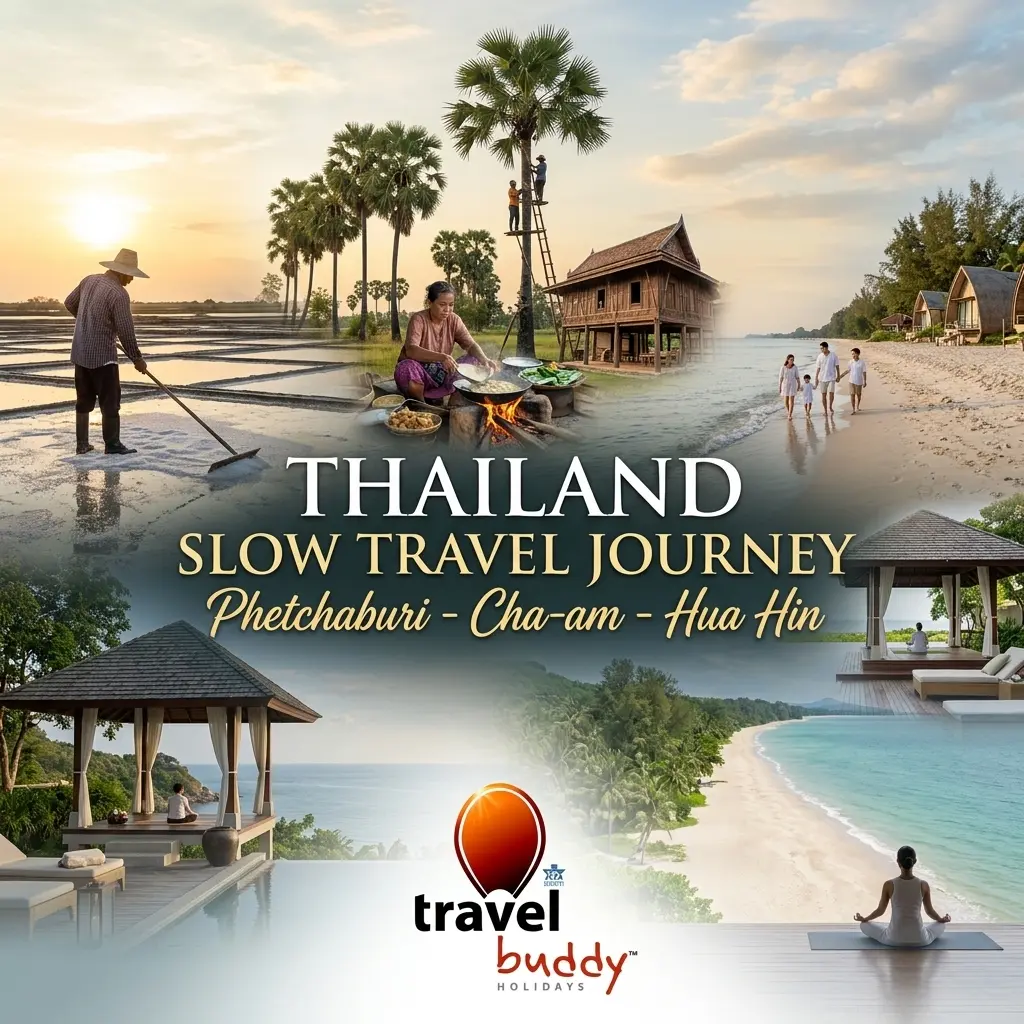
THAILAND TRAVEL · FOOD & WELLNESS · SLOW ROAD TRIP · 2026
Phetchaburi to Hua Hin Road Trip: Salt Fields, Palm Sugar, Local Food & Seaside Wellness
A Phetchaburi Hua Hin itinerary can be far more interesting than driving directly to the beach. This stretch of Thailand combines a UNESCO-recognised food city, coastal salt traditions, toddy-palm culture, historic architecture, quieter seaside stops and Hua Hin’s established wellness and resort scene.
The key is to travel slowly enough to notice how the landscape changes. Phetchaburi tells its story through ingredients and agriculture; Cha-am provides an easy coastal pause; Hua Hin shifts the mood towards markets, dining, spa time and the sea.
For travellers who have already experienced Bangkok, Phuket or Thailand’s better-known island circuits, this route offers something different: a journey where food heritage and local lifestyles are as important as the final beach destination.
Why This Route Is Especially Relevant in 2026
On 28 September 2026, the Tourism Authority of Thailand introduced an “Amber Gastronomy” journey connecting Phetchaburi and Hua Hin.
The concept brings together Phetchaburi’s sea-salt traditions, toddy-palm culture and local cuisine before continuing towards Hua Hin for markets, rail experiences, wellness, spa time and seaside dining.
Rather than copying that programme stop for stop, this guide uses the same idea to build a flexible independent holiday around food, culture and a slower coastal finish.
Why Phetchaburi Deserves More Than a Quick Stop
Phetchaburi is often passed on the way south, yet the province has enough history, food and landscape to justify slowing down.
Tourism Thailand describes Phetchaburi as a destination of beaches, mountains, historical sites and local food. It is also associated with three royal palaces and a strong agricultural identity shaped by the coast and inland farming.
Most importantly for food travellers, Phetchaburi joined the UNESCO Creative Cities Network in the field of Gastronomy in 2021.
Phetchaburi is often described through three flavours: salty, sweet and sour.
Those flavours are connected with real local ingredients: sea salt from the coastal plains, palm sugar from toddy palms and tart ingredients such as local limes.
Stop 1: See Phetchaburi’s Salt Landscape
One of the most distinctive sights around coastal Phetchaburi is its salt-farming landscape.
Shallow evaporation ponds, white salt piles and open skies create a completely different visual experience from Thailand’s beaches and temples.
Sea salt is also part of Phetchaburi’s food identity. Tourism authorities specifically highlight the province for producing high-quality salt, making the landscape directly relevant to the food you encounter later in the journey.
Travel Responsibly Around Working Salt Farms
Remember that these are working agricultural areas rather than photography sets. Use designated visitor areas where available, avoid entering production zones without permission and follow local instructions.
Stop 2: Discover the Toddy-Palm Side of Phetchaburi
If salt represents the province’s savoury side, the toddy palm helps explain its sweetness.
Phetchaburi has a long association with toddy palms and palm sugar. Tourism Thailand highlights local experiences where visitors can learn how palm products are collected and transformed into food, drinks and desserts.
Depending on the experience and operating schedule, travellers may encounter demonstrations, food workshops, palm-based snacks or agricultural landscapes dotted with tall palms.
Palm Sugar Is More Than a Souvenir
The ingredient appears throughout local cooking and desserts, and understanding where it comes from adds context to the food you taste later.
This is exactly what makes Phetchaburi useful for a culinary trip: ingredients are not separated from the destination. The salt field, palm grove, market and restaurant all belong to the same food story.
What to Eat in Phetchaburi
Food travellers should resist the temptation to treat Phetchaburi as one famous dish.
The province’s cuisine reflects royal influences, regional traditions, local agriculture and ingredients associated with its salty-sweet-sour identity.
Kaeng Hua Tan
Toddy-palm curry is one of the local dishes TAT has highlighted when promoting Phetchaburi’s distinctive gastronomy.
Khao Chae
Rice served with chilled scented water and accompaniments reflects another side of Phetchaburi’s culinary traditions.
Local Desserts
Palm sugar and other local ingredients make sweets particularly relevant on a food-focused Phetchaburi trip.
Add Heritage Before Heading to the Coast
Food is the main thread of this route, but Phetchaburi’s cultural landscape deserves time too.
Phra Nakhon Khiri and the wider historical city provide an opportunity to break up the culinary stops with architecture, viewpoints and local history.
Phetchaburi is sometimes called the city of three palaces because three kings of the Rattanakosin era established royal residences in the province.
Spending a morning on heritage before returning to food and agriculture creates a much more balanced trip than eating continuously from breakfast to dinner.
Stop 3: Pause in Cha-am Instead of Driving Straight Through
Cha-am sits between Phetchaburi’s inland food-and-heritage experiences and Hua Hin’s more developed resort atmosphere.
Tourism Thailand describes Cha-am as a quieter beach destination approximately 20 kilometres north of Hua Hin. That makes it a useful intermediate stop if you want to slow the journey further.
The experience here can remain simple: beach time, seafood, a walk and a relaxed lunch before continuing south.
The goal is not to add another destination simply to make the itinerary longer. Stop in Cha-am only if a quieter coastal pause improves the journey.
Stop 4: Finish in Hua Hin with Wellness and the Sea
Hua Hin changes the pace again.
Tourism Thailand positions the destination around beaches, seafood, night markets, golf and an established spa-and-wellness scene. That makes it a natural place to finish after several days of food exploration and road travel.
Instead of immediately filling the Hua Hin section with sightseeing, leave part of the programme deliberately open.
Spend time on the beach, book a spa treatment, enjoy a slow breakfast or simply use the resort facilities. Wellness works best when it creates space in the itinerary rather than becoming another appointment.
Explore Hua Hin After Sunset
One of Hua Hin’s advantages is that travellers can keep the daytime relaxed and become more active after sunset.
Hua Hin Night Market remains one of the destination’s recognised evening attractions, combining food, desserts, shopping and the energy of the town after dark.
Creative-market experiences can also fit well into the route when operating on your travel dates.
Rather than scheduling a formal restaurant every evening, leave room for spontaneous food discoveries and lighter meals after several days of tasting local cuisine.
Optional Twist: Include a Rail Journey
Although this guide is structured as a road trip, the 2026 Amber Gastronomy concept also included local rail travel around the Hua Hin section.
That provides an interesting variation: use a private vehicle or road transfer for the food-producing areas where flexibility is valuable, then incorporate rail for part of the coastal journey if the current timetable suits your itinerary.
Mixing transport styles can make the trip feel less like a conventional transfer from one hotel to another.
Suggested 4-Day Phetchaburi to Hua Hin Itinerary
| Day | Destination | Experience |
|---|---|---|
| Day 1 | Phetchaburi | Salt landscape, local lunch, heritage sightseeing and an introduction to the province’s three-flavour food identity. |
| Day 2 | Phetchaburi | Toddy-palm culture, food experiences, local desserts and a slower exploration of the province. |
| Day 3 | Cha-am → Hua Hin | Coastal drive, optional Cha-am beach stop, seafood lunch and arrival in Hua Hin. |
| Day 4 | Hua Hin | Wellness, beach time, relaxed sightseeing and an evening market or seaside dining experience. |
Travellers who prefer a slower holiday can easily add another Hua Hin night instead of introducing another destination.
Who Will Enjoy This Route?
Phetchaburi connects local ingredients directly with regional cooking traditions.
Food, road travel, quieter beaches and wellness create an easy alternative to a conventional resort-only holiday.
The route offers a different side of central Thailand without relying on the country’s most familiar destinations.
The journey rewards travellers who enjoy markets, agriculture, local food and smaller experiences between major attractions.
Do Not Turn a Slow-Travel Route into a Checklist
The biggest risk with this itinerary is trying to include every salt field, farm, temple, market, beach and wellness experience in one trip.
That would defeat the purpose.
Choose one or two meaningful experiences in Phetchaburi, eat without rushing, stop in Cha-am only if it suits the journey and leave genuine free time in Hua Hin.
The pleasure of this route comes from the transition between places, not from the number of pins you can add to a map.
Build a Different Thailand Holiday with Travel Buddy Holidays
Thailand holidays do not need to follow the same Bangkok–Pattaya–Phuket formula.
Travel Buddy Holidays can help travellers customise Thailand programmes around food, culture, smaller destinations, beaches and wellness according to their preferred pace.
A Phetchaburi–Hua Hin journey can also be combined with Bangkok before or after the road trip, giving travellers a city, food and seaside experience within one holiday.
Final Thoughts: Taste the Journey Before Reaching the Beach
Hua Hin may be the best-known destination on this route, but arriving there should not be the only objective.
Phetchaburi’s salt fields explain one flavour of the province. Its toddy palms explain another. Local dishes connect those ingredients with history and community life. Cha-am introduces the coast gently before Hua Hin provides the final transition into wellness and seaside leisure.
That progression is what makes the itinerary interesting.
Instead of driving straight to the resort, give the journey itself a reason to matter.
Frequently Asked Questions
Is Phetchaburi worth visiting before Hua Hin?
Yes. Phetchaburi offers food heritage, historical attractions, coastal salt traditions and toddy-palm culture, making it a worthwhile destination rather than simply a transit point on the way to Hua Hin.
Why is Phetchaburi famous for food?
Phetchaburi is part of the UNESCO Creative Cities Network in the field of Gastronomy and is known for ingredients including sea salt, palm sugar and limes as well as distinctive regional dishes and desserts.
What local food should I try in Phetchaburi?
Local dishes highlighted by Thai tourism authorities include kaeng hua tan or toddy-palm curry, khao chae and regional sweets using ingredients associated with Phetchaburi’s food traditions.
Is Cha-am worth stopping at between Phetchaburi and Hua Hin?
Cha-am can be a worthwhile stop for travellers who want a quieter beach, seafood or a relaxed coastal break before continuing to Hua Hin. It is not essential if you prefer more time in the other two destinations.
Is Hua Hin good for a wellness holiday?
Hua Hin has a well-established resort, spa and wellness scene alongside beaches, dining and markets, making it suitable for travellers who want a relaxed finish to a sightseeing or food-focused journey.
How many days should I spend between Phetchaburi and Hua Hin?
Around four days provides a comfortable starting point for combining Phetchaburi food and heritage experiences with a coastal stop and relaxed Hua Hin stay. Travellers who prefer a slower pace can add another night.
Can Travel Buddy Holidays customise a Phetchaburi and Hua Hin itinerary?
Travel Buddy Holidays can help customise Thailand journeys according to the traveller’s preferred destinations, pace and interests, including food, cultural, beach and wellness experiences.
Discover Thailand Beyond the Usual Route
Combine Phetchaburi’s local food and heritage with the beaches and wellness experiences of Hua Hin in a customised Thailand holiday.