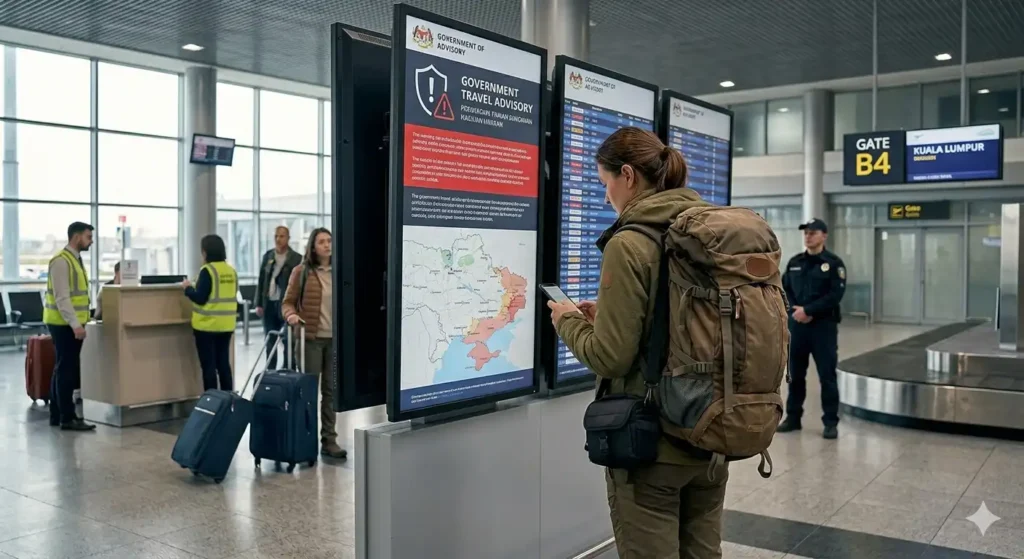
⚠️ Travel Safety Series · Part 1 of 4
Every year, thousands of travellers face a difficult question — can you still travel when a war or conflict is happening? Whether it’s a country you’ve already booked, a destination close to an active conflict zone, or a region under rising political tension, the answer is rarely simple.
The short answer is: technically yes, but whether you should is an entirely different matter. At HolidayDeals.my, we believe every traveller deserves honest, expert-backed guidance — not vague reassurances. This guide breaks down everything you need to know before making any travel decision during a conflict situation.
“Travelling during a conflict isn’t just a personal risk — it can place rescue services, local communities, and fellow travellers in danger. Make informed decisions, not impulsive ones.”
— HolidayDeals.my Travel Safety Team
What Does “Travelling During a War” Actually Mean?
When we talk about travelling during a war or conflict, we are referring to a broad spectrum of scenarios — from visiting a country neighbouring an active conflict zone, to transiting through a nation under civil unrest, to travelling within a country where fighting is limited to one specific region far from your destination.
Each scenario carries vastly different risk levels. A beach resort in a peaceful coastal province is a very different situation to travelling near an active front line. Understanding the type, scope, and proximity of conflict to your specific destination is your first and most critical step.
Government Travel Risk Levels — What They Mean
Most governments publish official travel advisories that classify destinations by risk level. Malaysian travellers should always consult Malaysia’s Ministry of Foreign Affairs (Wisma Putra) before travelling to any destination showing signs of instability.
🟢 Level 1 — Exercise Normal Caution
Destination is considered safe. Standard travel awareness recommended. Proceed with your trip as planned.
🟡 Level 2 — Exercise Increased Caution
Some risks present. Research specific regions carefully. Stay alert to local news and developments.
🟠 Level 3 — Reconsider Travel
Serious risks including civil unrest or armed conflict. Travel only for critical or essential reasons.
🔴 Level 4 — Do Not Travel
Active conflict or extreme danger. Travel is strongly prohibited. Embassy assistance may be unavailable.
5 Critical Questions to Ask Before Travelling Near a Conflict Zone
What is the current government travel advisory level for my destination?
Check Malaysia’s Wisma Putra, the UK FCO, or the US State Department for up-to-date risk ratings specific to your destination and region.
Is the conflict localised or widespread across the country?
Many countries experiencing conflict have large, completely safe areas. Understand whether your specific city or resort region is directly affected.
Is my travel insurance valid at this destination?
Standard policies exclude conflict zones. Verify your coverage or purchase specialist war-zone travel insurance before departing.
Is there a functioning emergency or evacuation plan?
Know the location of your nearest embassy or consulate. Register your travel with your government’s official traveller registration service before you fly.
Can I change or cancel my booking if the situation escalates?
Always book through a reputable travel agent with flexible cancellation and rebooking policies. HolidayDeals.my offers booking protection on all our packages.
Who Actually Travels During Conflicts — and Why
While leisure tourists are strongly advised to avoid conflict zones, certain groups travel to or near affected regions for legitimate professional reasons:
- Journalists & Media Professionals — covering conflicts with specialist safety training and support
- Humanitarian Aid Workers — operating with NGOs and UN agencies under strict security protocols
- Business Travellers — with critical operations in partially affected regions
- Diaspora Families — visiting relatives in stable areas of an affected country
- Researchers & Academics — conducting essential field work under institutional safety frameworks
Even these experienced professionals undergo rigorous risk assessments and hold specialist insurance. For the average leisure traveller, the answer is almost always: postpone and rebook to a safer destination.
⛔ Do Not Travel If Any of These Apply
- Your government has issued a Level 3 or Level 4 travel advisory for the destination
- Commercial airlines have suspended or cancelled flights to the destination
- Your embassy has urged nationals to leave the country immediately
- Travel insurance providers are declining to cover the region
- Hospitals, airports, and local infrastructure are severely disrupted
Can You Get a Refund If War Breaks Out at Your Destination?
This is one of the most common questions we receive at HolidayDeals.my. Most reputable airlines and tour operators will offer full refunds or free date changes when a government issues a Do Not Travel advisory. However, this protection only applies if you booked through a professional travel agent — DIY bookings through budget platforms often offer zero protection.
💡 HolidayDeals.my Booking Protection
- ✅ Flexible rebooking when government travel advisories are issued
- ✅ Real-time destination safety monitoring with proactive client alerts
- ✅ Force majeure clauses covering conflict-related travel disruptions
- ✅ Free expert guidance on safe alternative destinations — no penalty
Frequently Asked Questions
🔗 Continue Reading — War & Travel Safety Series
👉 How to Travel Safe During a War — Part 2
👉 Safest Countries to Travel During Conflict — Part 3
👉 How to Book Safe Tours During a War — Part 4
🌐 Official Resources
Don’t Risk It — Book Safe with HolidayDeals.my
Our travel experts will help you find the safest, most enjoyable destinations — with full booking flexibility and complete peace of mind.
© 2025 HolidayDeals.my · All rights reserved. Content powered by Travel Buddy Holidays DMC.
This article is for informational purposes only. Always consult official government travel advisories before making travel decisions.